
Description
Something is keeping you awake, and it isn’t your body.
Your nervous system knows exactly what to do. It has run this protocol thousands of times. The drop in core temperature, the slowing brainwave activity, the transition from alert beta through alpha into the theta range that borders sleep — these processes are already wired in, already waiting for the signal.
What disrupts them is the part of the mind that won’t stop running: the internal narrator, the problem-solving mechanism that doesn’t distinguish between 2pm and 2am. It runs the same loops regardless of the hour, looking for resolution that doesn’t arrive.
Clinical hypnosis doesn’t fight that mechanism. It redirects it.
In 20 minutes, you’ll move through a structured induction designed to shift your brainwave state from the alert patterns that keep you awake into the theta range that sits at the edge of sleep — the same territory that takes most people hours to reach on their own.
The language in this session is drawn from Ericksonian hypnosis — the same tradition that underlies modern clinical hypnotherapy — using indirect suggestion, embedded commands, and naturalistic trance induction to guide you across the threshold without effort or resistance.
There’s nothing to try. The session does the work. Your only task is to listen.
The audio layer: binaural beats and isochronic tones
This session is built on more than language. Underneath the hypnotic induction, the audio is engineered to actively support the brainwave shift.
Binaural beats work by delivering two slightly different frequencies — one to each ear. The brain perceives the difference between them as a third tone and begins to synchronize its own electrical activity to that frequency. This is called the frequency following response. Tuned to the theta range (4–8 Hz), binaural beats guide the brain toward the drowsy, pre-sleep state that most people struggle to reach intentionally.
Isochronic tones take this further. Where binaural beats are perceived internally, isochronic tones are pulsed directly into the audio at precise intervals — sharper, more defined, and more efficient at driving entrainment for many listeners. They don’t require the brain to construct the beat; it’s already there in the sound.
Together, they create a layered entrainment environment that works in parallel with the hypnotic language — not as background music, but as a neurological tool designed to do exactly what the session asks of you.
Music composed by Christopher Lloyd Clarke, whose work in therapeutic and meditative audio design is recognized internationally.
Headphones recommended — each ear needs to receive its own frequency for the binaural effect to work fully.
The session closes with post-hypnotic suggestions designed to carry into the next morning: not just sleep, but quality of rest, ease of waking, and how you feel in the first minutes of the day.
Most people notice a difference on the first listen. Some take a few sessions. Both are normal.
What you receive instantly:
- The full 20-minute audio — MP3, clean recording, black-screen compatible. Yours to keep, with all silent updates.
- Lifetime access.
90-Day Re-Wake Guarantee:
If on night 91 you’re still watching the ceiling, write to me. Full refund. Keep the file regardless — a session this specific is worth having near, even if the timing takes a few tries.
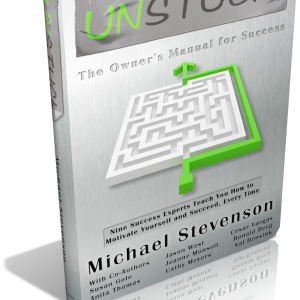
Developed by Jason West, Certified Clinical Hypnotherapist and NLP Master Practitioner (MNLP, MTT, MHt). Music composed by Christopher Lloyd Clarke. This session uses Ericksonian language patterns, clinical induction technique, binaural beats, and isochronic tones — not relaxation audio, not guided meditation. Hypnosis for people who want something that actually works.


Reviews
There are no reviews yet.