
The framework
Chakras, explained
The chakras are the map most energy traditions share: seven centers running from the base of the spine to the crown of the head, each associated with a region of life. Here is the map in plain language — and how it shows up in real practice.
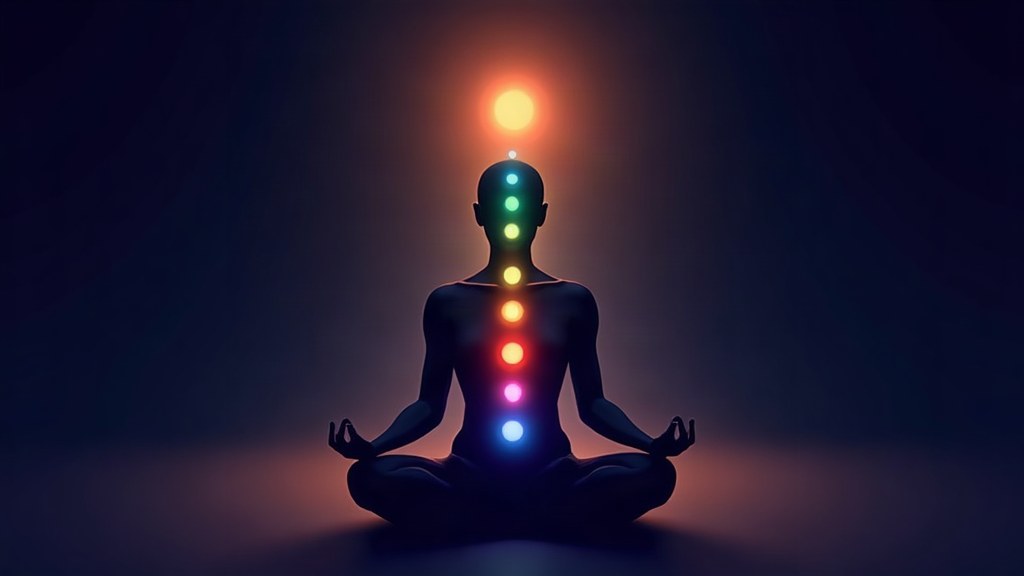
The seven, bottom to top
- Root (base of spine) — safety, stability, belonging. The “can I rest?” center.
- Sacral (lower abdomen) — creativity, pleasure, emotion, flow.
- Solar plexus (stomach) — personal power, confidence, boundaries.
- Heart (chest) — connection, compassion, grief and gratitude alike.
- Throat (throat) — expression, speaking the true sentence.
- Third eye (forehead) — intuition, perspective, inner vision.
- Crown (top of head) — the spacious, connected, “bigger picture” state.
In the traditions, each center is drawn as a spinning wheel of energy with an associated color — red at the base rising through the spectrum to violet at the crown. You will see that rainbow on every yoga studio wall; now you know what it is listing.
How chakra work actually looks in practice
Almost nobody sits around “unblocking” a chakra in the abstract. In real sessions and self-practice, chakra work means attention with intention: a body scan that pauses at the heart for a few minutes, a meditation that imagines light at the solar plexus, a reiki practitioner spending longer where the client holds tension. The chakra map gives the practice a vocabulary and an order — a way to notice that the tight throat and the unspoken sentence might be related.
The honest paragraph
Whether the chakras are literal energy anatomy or a symbolic map of human experience is a question for whichever frame you find useful — practitioners hold both views and often both at once. What is not in dispute: attention moved deliberately through the body, region by region, produces the same deep relaxation that reiki and self-hypnosis produce. The chakra map gives that attention a structure beginners find genuinely useful.
Trying a chakra scan
Use the body-scan step from the self-hypnosis method, but walk it up the seven centers — a few slow breaths at each, imagining each one glowing a little brighter as you pass. Start at the root, end at the crown. It slots into any session in five extra minutes.