
Most people’s first exposure to hypnosis is a stage act: a volunteer clucking like a chicken in front of a laughing crowd. That image is why hypnosis gets dismissed as a party trick rather than taken seriously as a clinical tool. The two practices share a name and almost nothing else. One is entertainment built on audience psychology and volunteer selection. The other is a documented neurological state with a measurable signature in brain imaging.
The brain during hypnosis: what the imaging shows
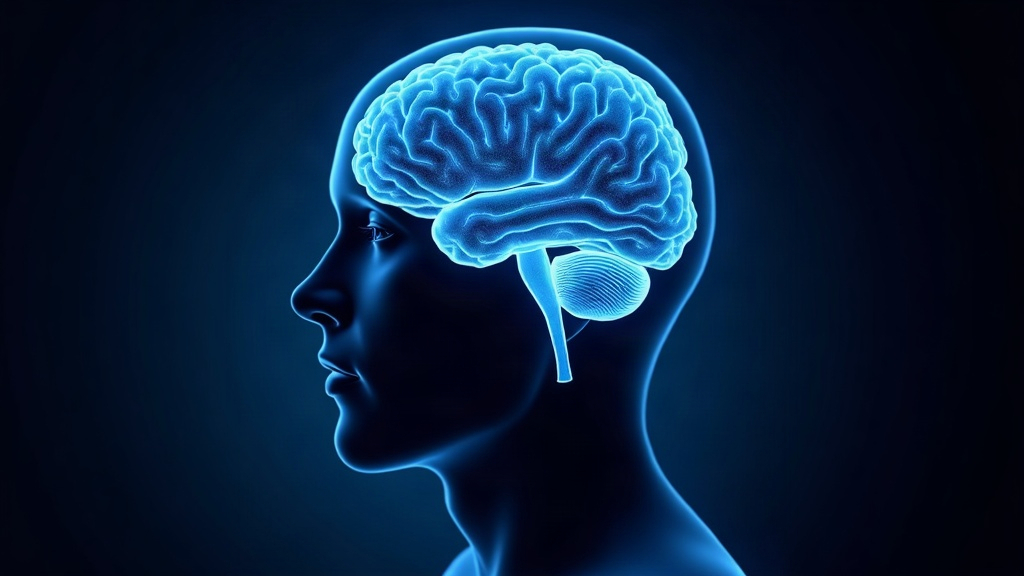
In 2016, a Stanford University School of Medicine team led by David Spiegel, MD, published fMRI findings in Cerebral Cortex after scanning 57 people during guided hypnosis. To isolate the effect of hypnosis itself, they compared people who scored consistently high on standardized hypnotizability scales against people who scored on the low end, and imaged both groups at rest, during memory recall, and during hypnosis.
Three changes showed up only in the highly hypnotizable group, and only during hypnosis:
1. Reduced activity in the dorsal anterior cingulate cortex. This region belongs to the brain’s salience network — the system that flags what deserves your attention and what’s a threat. Lower activity here tracks with the felt sense of hypnosis as intense, narrowed absorption. The background noise of competing concerns drops out.
2. Stronger connectivity between the dorsolateral prefrontal cortex and the insula. The insula processes internal bodily states — pain, temperature, visceral sensation. Tighter coupling with the prefrontal cortex gives the brain’s executive control systems more direct access to bodily signals, which lines up with hypnosis’s documented use in pain modulation.
3. Weaker connectivity between the dorsolateral prefrontal cortex and the default mode network (particularly the medial prefrontal cortex and posterior cingulate cortex). This is the mechanism Spiegel points to for why hypnotic suggestion can produce action without the usual self-monitoring commentary. When you’re absorbed in something, you act without narrating the act to yourself. Hypnosis appears to amplify that disconnect on purpose.
None of this shows up in low-hypnotizability subjects performing the identical task. The state depends on trait-level capacity, not on props, tone of voice, or theatrics.
What stage hypnosis is actually doing
Stage hypnosis works because of pre-selection, not because of technique. Performers run the audience through quick suggestibility tests before the show even starts — arm levitation, hand-clasp tests, imagined lemon exercises. People who respond fastest and most visibly get invited on stage. That’s not a curiosity; it’s the entire mechanism. The show is built entirely from people already near the top of the hypnotizability distribution.
Once on stage, social dynamics do most of the remaining work: an audience watching, a spotlight, an implicit contract that volunteers are there to perform. Compliance, social pressure, and a permission structure to act uninhibited in public do a lot of the heavy lifting that gets attributed to the performer’s authority or the swinging watch. Some of what looks like “hypnotic control” is ordinary social psychology wearing a costume.
Stage hypnosis has no therapeutic goal, no informed consent process, no follow-up, and no clinical screening for who should or shouldn’t be put through it. That’s a fundamentally different activity from a treatment protocol, even when both are labeled “hypnosis.”
What clinical hypnosis is actually doing
Clinical hypnosis (sometimes called hypnotherapy) is a structured, goal-directed intervention delivered by a trained practitioner, aimed at a specific outcome: pain reduction, anxiety management, smoking cessation, sleep, habit change. It uses the same underlying neurological capacity documented in the Stanford imaging work, directed at a therapeutic target instead of a performance.
The evidence base is not new or fringe. The American Psychological Association recognizes hypnosis (Division 30, Society of Psychological Hypnosis) as a legitimate area of clinical practice and research. Clinical applications with published support include:
- Procedural and chronic pain management
- Irritable bowel syndrome
- Anxiety around medical procedures
- Smoking cessation
- Sleep difficulty
Hypnotizability itself sits on a spectrum. Roughly 10–15% of people test as highly hypnotizable, a similar percentage test as low-responding, and most people fall in the middle with meaningful capacity to respond to well-structured suggestion. Clinical work is designed around that full range, not just the most responsive 10%.
The actual difference, in one line
Stage hypnosis selects for the most suggestible people in a room and uses social performance pressure to produce entertainment. Clinical hypnosis uses a documented neurological state — reduced salience-network noise, tighter brain-body signal coupling, loosened self-monitoring — deliberately, with consent, toward a specific health outcome. Same underlying capacity. Different intent, different structure, different result.
Where this fits at MetaShifts
Every audio session in the MetaShifts library is built on this framework: guided induction, absorption, and suggestion structured around a specific outcome — sleep, focus, quitting smoking, weight-related habit change, anxiety reduction. Nothing theatrical, nothing performative. If you want to see how this plays out in practice, browse the full audio library or book a session directly.
Browse audio sessions → | Book a session →
This page is educational and does not constitute medical advice. Hypnosis is not a substitute for treatment of diagnosed medical or psychiatric conditions. Consult a licensed provider for individual concerns.